Three 2019-W Lincoln Cents: Same Mint Mark, Different Finishes
The three 2019-W cents share a mint mark, but their finishes and intended set pairings differ. A documented release exception shows why packaging needs context.
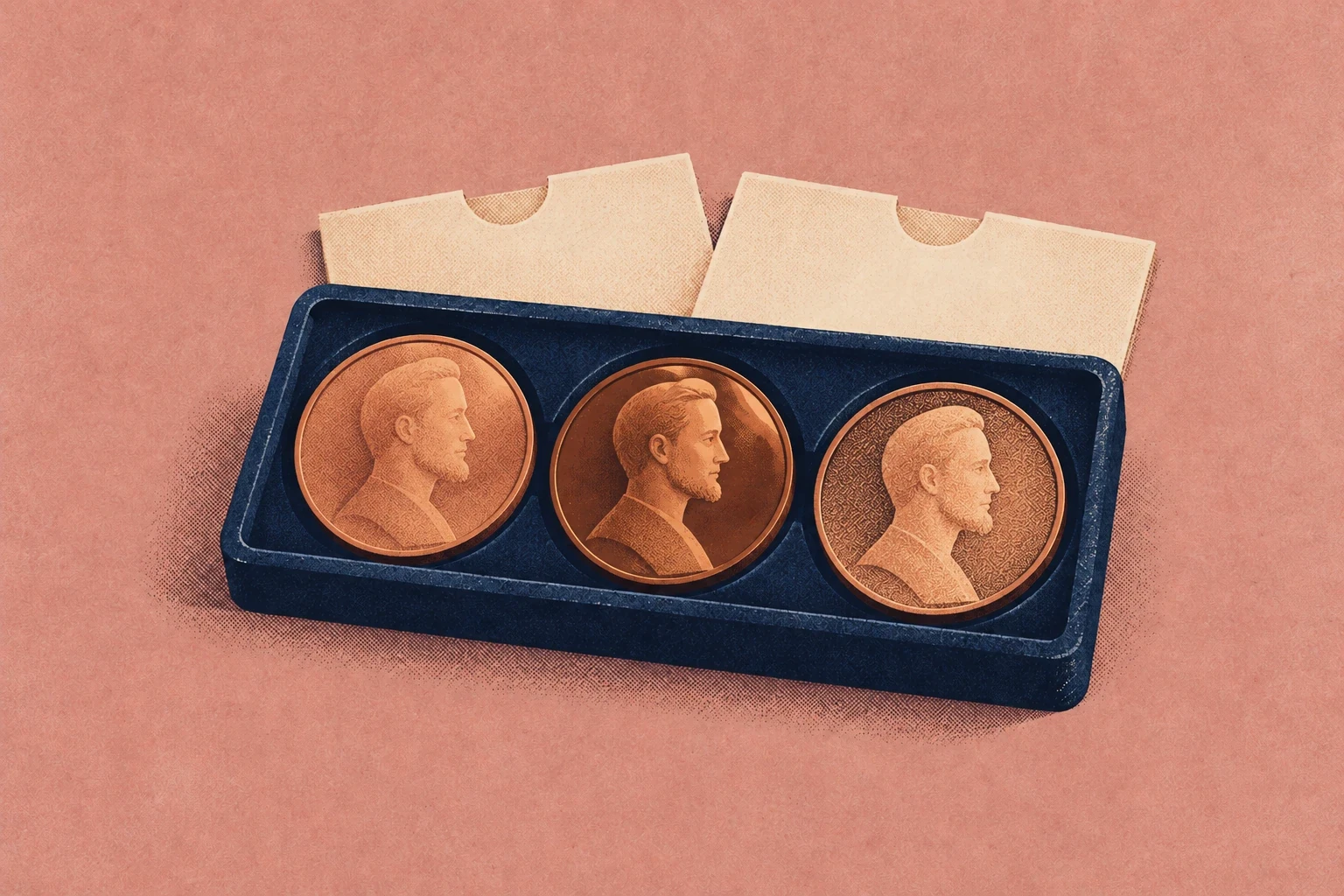
A 2019 Lincoln cent with a W mint mark is not identified completely by that letter. The United States Mint offered three versions: proof, reverse proof and uncirculated. Each had a different intended annual-set companion. A useful description therefore needs to answer three separate questions: where was it struck, which finish does it have, and what evidence connects it with the packaging shown?
The distinction matters when a loose coin, a clear wrapper and an annual-set box appear together in a listing. Those pieces of evidence should agree, but the box alone cannot settle the coin's identity. There is even a documented historical exception to the intended set-and-finish pairings.
In this article
Start with the Mint's three intended pairings
The 2019 United States Mint Proof Set, product code 19RG, came with an additional 2019-W proof Lincoln cent. The Mint described the extra cent as separately packaged in clear United States Mint plastic wrap, rather than housed with the set's other coins. This is the pairing recorded in the Mint's March 2019 Proof Set announcement.
The 2019 United States Mint Silver Proof Set, code 19RH, had a different extra: a 2019-W reverse proof cent, again in its own clear Mint wrapping. The April 2019 Silver Proof Set announcement explicitly distinguishes that finish from the proof cent associated with 19RG.
The 2019 United States Mint Uncirculated Coin Set, code 19RJ, completed the group with an additional 2019-W uncirculated cent, also separately wrapped. The May 2019 Uncirculated Set announcement supplies the third pairing. These are historical release records, not statements about present availability or price.
Keep that short reference together: 19RG with proof; 19RH with reverse proof; 19RJ with uncirculated. It describes the intended distribution. It is not a certificate for any particular coin placed beside a box today.
Read the background and portrait separately
On a conventional proof, the recessed background, or field, is mirror-like and the raised design is frosted. Reverse proof reverses that contrast: the field is frosted and the raised design is mirror-like. The Mint explains both finishes in its penny reference material. Look at the relationship between background and design, rather than asking whether the coin is simply shiny.
For a listing photograph, write what is visible before assigning a finish. For example: “The background appears reflective; the portrait appears frosted in this view.” That wording preserves an observation without pretending that one photograph resolves lighting, surface condition or authenticity. Ask for clear views of both sides with the lighting angle changed if the contrast is ambiguous.
The third cent is the Mint's uncirculated issue. Do not collapse that product description into a promise of flawless condition. The Mint's collecting glossary explains that “uncirculated” has several uses, including a preservation description and a manufacturing process for collector coins. Likewise, proof identifies a method of production; it does not tell you that a particular specimen is undamaged today.
What each clue can establish
The W belongs in the mint-mark field of your record. For this trio it identifies West Point, but all three finishes share it. Reading W correctly does not choose among proof, reverse proof and uncirculated.
The observed surface contrast belongs in a separate finish field. It can support a comparison with the Mint's descriptions. It cannot, by itself, authenticate the coin, assign a numerical grade or establish which box originally accompanied it.
The product code belongs in the packaging field. It identifies the intended set pairing in the release records. Photograph the code and note whether the cent is loose, separately wrapped or in a third-party holder. Do not silently convert “shown with 19RH packaging” into “documented as originally issued with this particular 19RH set.”
A real exception to the tidy three-way chart
On April 4, 2019, NGC reported that it had certified a reverse proof 2019-W cent mistakenly included with a clad Proof Set. It had arrived within a bulk submission of proof cents, before the reverse proof's scheduled release. NGC recorded the unusual inclusion on its certification label. Its contemporary account is direct evidence of that reported case.
That exception does not make every conflicting listing a Mint error. It shows why a mismatch should prompt an evidence question rather than an automatic verdict. A seller's unexplained combination of coin and packaging is not equivalent to the documented example NGC examined.
Work through a conflicting listing
Imagine a listing showing a 2019-W cent beside a 19RG box. The photograph seems to show a frosted field and reflective portrait, suggesting reverse proof rather than the expected proof. This is a hypothetical example, not a diagnosis of an actual sale.
Record the conflict first: “19RG packaging shown; apparent reverse-proof contrast in the available image; original association unverified.” Next request sharper photographs of both faces, the complete wrapper or holder, the product code, and any documentation connecting this coin to that set. Ask whether the cent and box have remained together or were combined later. Do not request that a sealed holder be opened.
If improved photographs show the expected proof contrast, revise the finish observation. If the conflict remains, retain it and seek an appropriately qualified examination before making an exceptional-issue claim. Neither the ordinary pairing nor the historic NGC case should be used to force uncertain evidence into a preferred answer.
Finish the description before discussing value
A useful entry can be brief: “2019-W Lincoln cent; finish provisionally identified as proof from supplied photographs; separate wrapper present; 19RG box shown; association not independently established; condition not graded.” Change each field only when the evidence supports the change. Never clean or polish a coin to make its finish easier to read.
If a third-party slab is involved, our guide to checking a PCGS certification number covers a different part of the task. For these three cents, keep mint mark, finish, present condition and packaging history distinct. That gives the next reader something more useful than “W penny”: a description they can check.