Edison Cylinder Records: Why ‘Four-Minute’ Is Only Half the Story
Wax Amberol and Blue Amberol records can share a four-minute description. Material, condition and playback suitability still need separate checks.
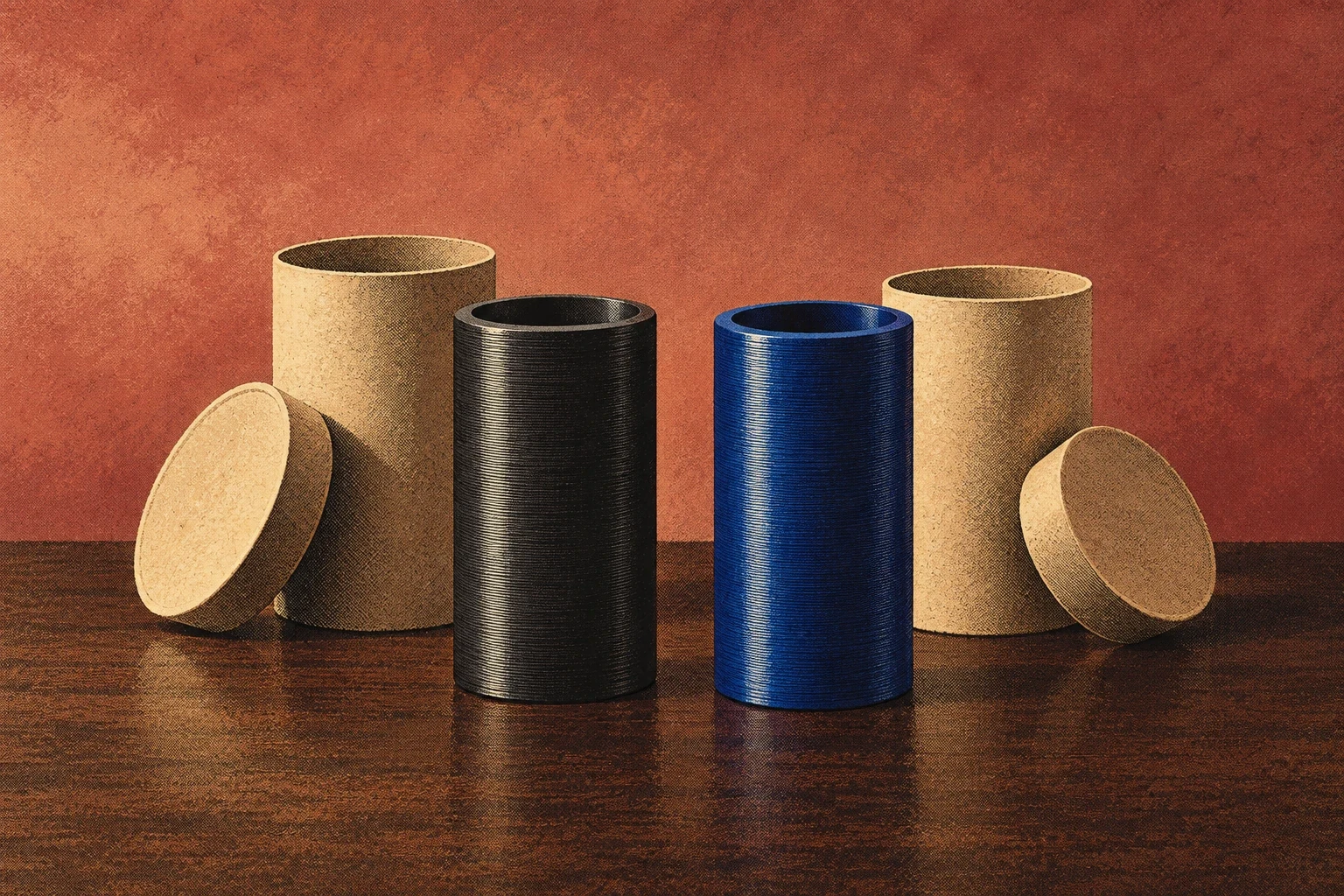
Two cylinders described as Edison four-minute records can require different treatment. The duration label helps identify a recording format, but it does not tell you everything about the material, its condition or the equipment suited to it.
That distinction matters when a collection arrives with a phonograph, several boxes and the reassuring assumption that everything belongs together. Before trying a record, separate three questions: what it is, which format it uses and whether this particular copy should be played at all.
In this article
How four minutes changed the cylinder
The Science Museum Group's record for three wax Amberol cylinders explains the technical change introduced in 1908. The new cylinder carried twice as many grooves in an equivalent-sized format: 200 threads per inch rather than 100, extending the nominal playing time from two minutes to four.
The museum also identifies the 4M marking used on these wax Amberols, followed by the recording number. Four-minute playback required changes to equipment designed for the earlier groove pitch. Similar overall size was therefore not enough to establish compatibility.
This is a historical explanation, not an instruction to adjust a machine. A cylinder that appears to fit a phonograph has not passed a playback check simply because it sits in place.
Read the material and the format together
The University of California, Santa Barbara's Cylinder Identification Guide separates wax from celluloid before branching through color and markings. Within its black-wax branch, two-minute and four-minute outcomes both appear. Its blue-celluloid branch includes four-minute Edison Blue Amberol records.
The guide's scope is important: standard two-inch American commercial cylinders. It excludes some unusual labels, colors and non-commercial recordings. A family recording or instructional cylinder should not be forced into the nearest-looking commercial category.
For that reason, “black cylinder” is an incomplete description, and “four-minute cylinder” is another incomplete description. Keep the material identification, maker information and format evidence beside one another. If the material is uncertain, leave it uncertain; do not scratch, heat or otherwise test the surface to fill the gap.
The same duration can lead to different preservation decisions
UCSB's separate Collectors' Guide to Cylinder Playback distinguishes celluloid, two-minute black wax, four-minute black wax and other cylinder types. It also separates common copies in lesser condition from preservation copies, which may be rare or exceptionally well preserved.
The guide warns that playback wear can accumulate without being obvious after a single play. It treats four-minute black wax as very fragile and makes equipment suitability conditional on more than the duration label. This is why identification and playback are different decisions.
For a newly inherited or poorly documented collection, a qualified sound-preservation specialist can help assess the specific record and equipment. A format name alone cannot establish that an old reproducer, stylus or record surface is ready for use.
Compare two hypothetical records
Imagine two records described in a collection inventory. These are illustrative examples, not cylinders that we have examined.
Record A is identified as an Edison wax Amberol with a readable 4M marking. Record B is identified as an Edison Blue Amberol. Both have been placed in a group called “four-minute records.”
The group name is useful for one purpose: organizing the format information. It is insufficient for choosing a playback procedure. A clearer inventory gives each record its own material, identification evidence, observed condition and any specialist assessment. Record A should retain its wax identification; Record B should retain its celluloid identification.
Now change one detail: suppose Record A is merely dark in a seller's photograph, and its rim cannot be read. The careful entry becomes “material and format unconfirmed,” with a request for readable views. It does not inherit a wax identification or four-minute classification from the other records around it.
The useful outcome is a better question: “Can you confirm the cylinder type from these markings and advise whether this copy is suitable for playback on this specific, assessed machine?” That question leaves room for the answer to be preservation or digitization rather than demonstration.
Keep a short record before any playback decision
Write down the visible maker or brand wording and catalogue number exactly, including question marks where characters are unclear. Note whether that wording appears on the cylinder itself, its container or a separate label. Do not silently treat all three as the same source.
Record the material only as confidently as the evidence allows. Add the two-minute or four-minute classification and where it came from. Keep photographs with that entry so a later correction does not erase the original observation.
Finally, separate visible condition from an operating verdict. “No obvious crack in the supplied photographs” is narrower than “safe to play.” Missing views, uncertain material and unassessed equipment are all legitimate reasons to stop short of the latter claim.
Avoid turning identification into a cleaning experiment
The Library of Congress's audio-material care guidance advises keeping fingers away from a cylinder's grooved playing surface and storing cylinders upright on end. It reserves cylinder cleaning for preservation specialists because the work is delicate.
Do not wash, sand, ream or polish a cylinder to make a marking clearer or make it fit a machine. If it resists removal from a container or shows damage, stop rather than forcing the next step. The collection's sound can remain part of its story while its physical preservation takes priority.
The broader habit is the same one used in our guide to checking provenance records: keep the documented statement, the object match and the unanswered question separate. For cylinders, that habit helps prevent a familiar name or playing-time label from standing in for a complete assessment.