A First Edition in a Facsimile Dust Jacket: What an Online Listing Should Tell You
Separate the book's edition from the jacket's origin, use a worked comparison and record missing disclosure before comparing collectible books.
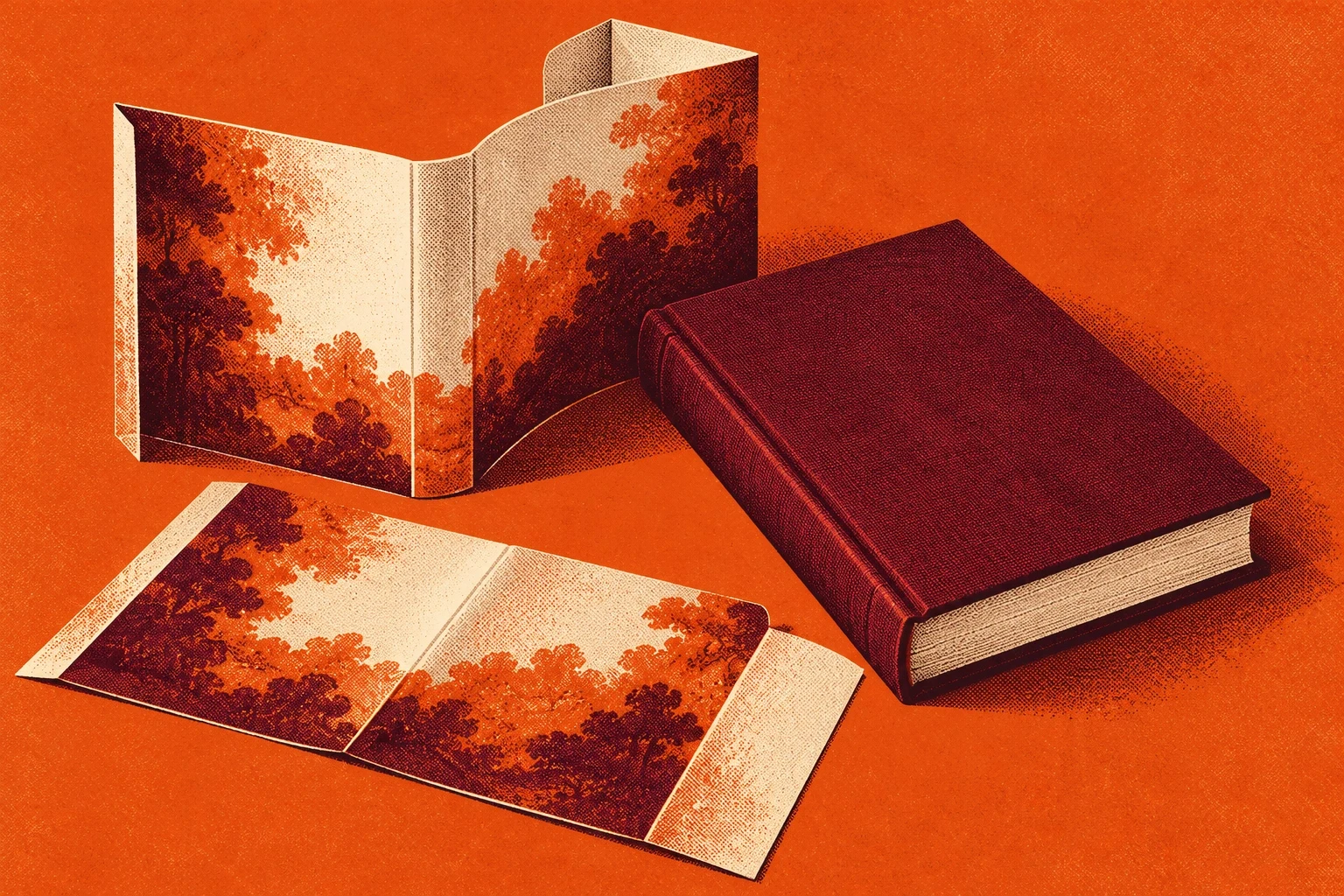
A genuine first-edition book can be accompanied by a reproduction dust jacket. Before comparing it with another copy, make two records: one for the book and one for the jacket.
Specialist bookseller Tom Congalton describes first editions paired with facsimile jackets and the confusion this can cause. His account is a reason to read the two descriptions separately, not a basis for judging a particular seller or assigning a current value. Between the Covers on facsimile jackets
A disclosed reproduction can also be a deliberate choice. Facsimile Dust Jackets describes collectors using its products to enjoy jacket artwork and protect books, as well as research and production uses. Buying a reproduction knowingly is a different situation from assuming a jacket is original. The producer's account
In this article
Describe the book first
Record the title, author, publisher, place of publication and the edition or printing claimed. Ask what evidence supports the claim for this particular title.
A specialist guide from Books Tell You Why emphasizes bibliography and title-specific points of issue. This is preferable to applying a single shortcut to every publisher. A jacket's attractive appearance cannot supply missing evidence about the book beneath it. Books Tell You Why's guide
If you are comparing an American first edition with a British first edition, keep the publisher and issue information attached to each copy. Do not merge them under an unqualified “first edition” heading.
Give the jacket its own entry
Ask whether the jacket is described as original, a facsimile or of uncertain origin. Record any claimed issue, clipping, missing areas or restoration separately.
Request readable photographs of the front and rear panels, spine and flaps. A visible reproduction statement is relevant evidence. An absent statement, especially in incomplete photographs, is not proof of originality.
If the seller uses a broad condition phrase, ask what it includes. “Jacket supplied” tells you much less than an explicit description of the jacket's origin and condition. Keep the seller's answer with the listing rather than relying on your memory of the conversation.
There is no need to conduct a home authenticity test to make this record. If the jacket is important to the purchase and the evidence remains uncertain, consult a knowledgeable bookseller or specialist.
Worked comparison: two copies of an imaginary novel
This is a hypothetical example. The title, listings and documents are invented; no price estimate is implied.
Both copies of the imaginary novel The Lantern Room are described as the first American printing. For this example, each seller provides the same relevant book-identification evidence.
Copy A has a clearly disclosed facsimile jacket. The flaps are photographed, and the reproduction statement is visible.
Copy B is described as having an original jacket. Only the front panel is pictured, and the description does not address clipping or repair.
Your record for A can distinguish a supported book claim from a disclosed reproduction jacket. Your record for B should leave jacket origin and condition open pending further evidence.
The tidy presentation of A does not turn its jacket into an original. The incomplete evidence for B does not prove it is a reproduction. Until those differences are resolved, the two listings are not a clean comparison of equivalent book-and-jacket combinations.
Copy this two-part collection record
BOOK
- Title and author:
- Publisher and place:
- Edition or printing claimed:
- Bibliography or other title-specific reference consulted:
- Relevant evidence photographed:
- Book condition and stated alterations:
- Unresolved book question:
JACKET
- Origin claimed — original / facsimile / unknown:
- Jacket issue claimed:
- Panels and flaps photographed:
- Reproduction statement visible — wording / not shown:
- Clipping, losses or repairs disclosed:
- Evidence supporting origin or issue:
- Unresolved jacket question:
COMPARISON
- Listing URL and date:
- Which other copy am I comparing:
- Does it have the same book edition and printing:
- Does it have the same jacket category:
- Which differences still prevent a like-for-like comparison:
Retain this split record when the book enters your collection. It gives you a clear description to use later and preserves the distinction between the literary object, its protective artwork and what you actually know about each.
For how seller-provided information differs from platform review, read Collectorium’s trust model