Daguerreotype, Ambrotype or Tintype? Check the Image Without Taking the Case Apart
Use an intact-case observation sequence to describe an early photograph, distinguish clues from certainty and know when to ask a specialist.
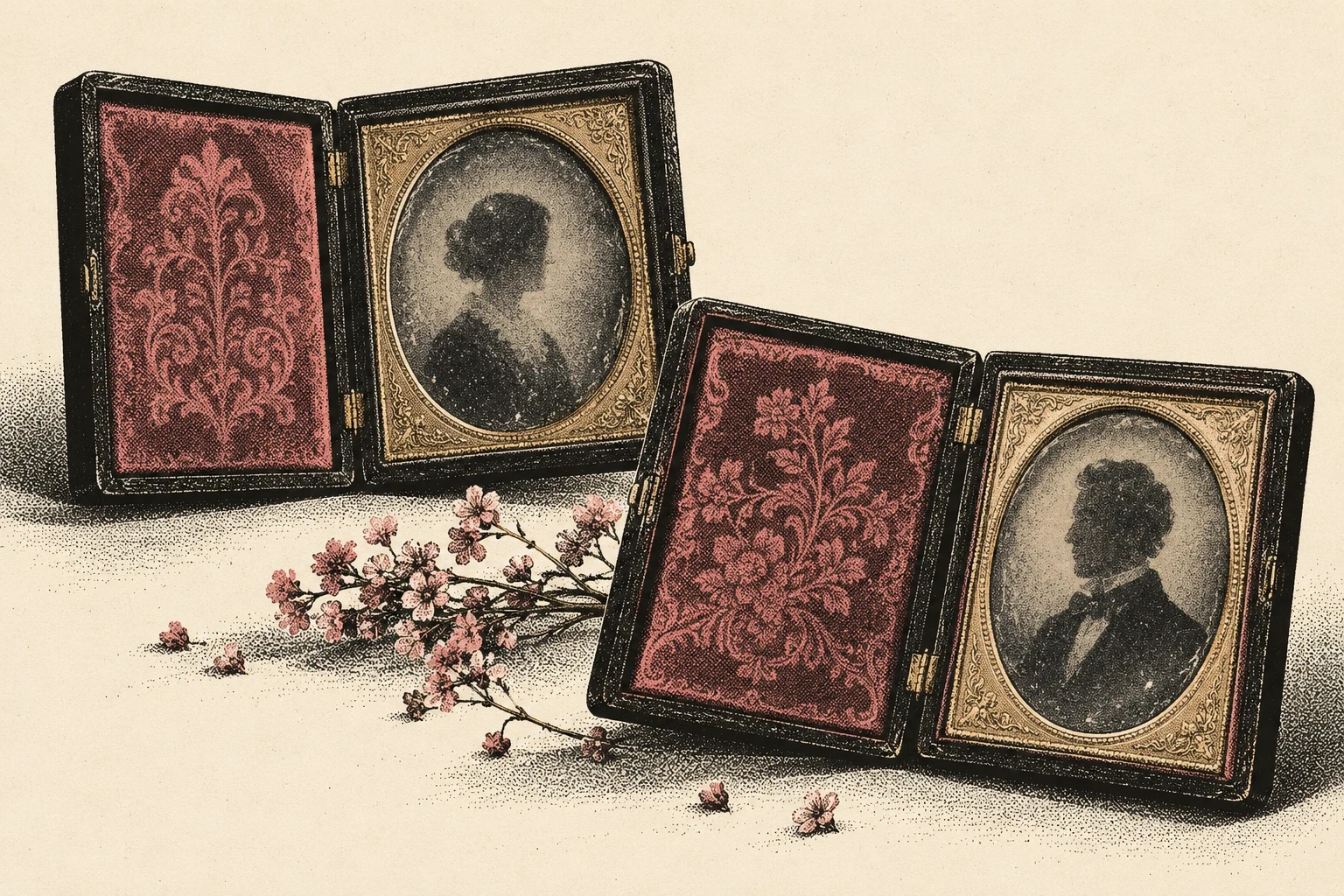
Leave the image assembly intact while you identify a cased photograph. You can often gather useful clues from its appearance and the information already visible, but an uncertain description is better than damage caused by trying to force a definite answer.
The decorative case and the photograph inside it deserve separate entries in your collection record. The Canadian Conservation Institute describes cases used with all three processes, so the presence of a small hinged case does not settle which image you have. CCI encased photographic images
In this article
The three material clues
A daguerreotype has an image on a silver-plated copper support. Its mirror-like appearance can shift between a positive-looking and negative-looking image as the viewing angle changes.
An ambrotype is made on glass, with a dark backing making the image appear positive. A tintype uses an iron support. These material distinctions are useful, but the support may be hidden inside an intact assembly. You do not need to expose it to complete your first record. CCI description of the processes
Treat visible protective glass as part of the housing until you have evidence about the image support. Seeing glass over a photograph is not enough to call it an ambrotype.
Follow the safe stopping points
First, look at the case and assembly as they are. If something is loose, broken or unstable, stop handling. Describe the condition and obtain specialist advice before changing the object's position.
If the photograph can be viewed safely, observe it from slightly different positions without dismantling the assembly. Note how the image behaves, rather than merely writing “shiny.” Does the image itself become difficult to see or appear reversed in tone? Or is the most obvious change a reflection on the cover glass? If you cannot distinguish the two, write that down.
Next, record whether any part of the image support is already visible. If it is concealed, leave the field as unknown. Do not remove a plate, lift a frame, probe an edge or use a magnet to obtain an answer for this worksheet.
The Library of Congress recommends avoiding contact with photographic image areas and handling photographs by their edges or housing where possible. It also warns that even soft brushes can cause damage. This identification exercise includes no cleaning step. Library of Congress photograph care
Worked example: the answer stays provisional
Imagine a cased portrait offered as a daguerreotype. This example is hypothetical.
The case is intact. The seller provides one front-facing photograph showing a bright reflection. No part of the support is visible. The description does not explain how the image changes with viewing angle.
Your first entry is: “Cased portrait; photographic process unconfirmed.” The reflection alone does not supply the missing material evidence.
Suppose a further view shows the image appearing light in one position and dark in another. You can now record “appearance consistent with the daguerreotype behavior described by CCI,” while retaining the qualification that the object has not been examined in person by a specialist.
Alternatively, the new photograph may simply show the same image under a different glare. The outcome remains unconfirmed. Requesting a specialist opinion is a valid conclusion to the exercise, not a failure to identify the object.
Copy this intact-case decision record
- Case or housing description:
- Visible damage or loose parts:
- Safe to continue ordinary viewing — yes / uncertain:
- If uncertain, stop here and record the concern:
- Image appearance in the first view:
- Image appearance from a second safe viewing position:
- Could protective-glass reflection explain the difference:
- Support already visible — description / concealed:
- Information supplied by the seller:
- Provisional description:
- What would change that description:
- Question for a photograph specialist:
- Photograph files:
- Date recorded:
Keep the case with its image and retain the photographs that informed your description. A cautious record can be revised when better evidence arrives. A disassembled or altered object cannot always be returned to the condition in which you found it.
For how seller-provided information differs from platform review, read Collectorium’s trust model